Antigenic shift is the process by which two or more different strains of a virus, or strains of two or more different viruses, combine to form a new subtype having a mixture of the surface antigens of the two or more original strains. The term is often applied specifically to influenza, as that is the best-known example, but the process is also known to occur with other viruses, such as visna virus in sheep.[1] Antigenic shift is a specific case of reassortment or viral shift that confers a phenotypic change.
Showing posts with label Flu. Show all posts
Bacterial Chromosome-Escalating Infectious Disease Threat

Many antibiotics, which we have taken for granted since the 1950's, are now becoming ineffective because bacteria have developed ways of acquiring resistance. The development of new antibiotics is lagging behind the loss of the old ones in this race to combat infectious disease. Simultaneously, there is an increase in infectious diseases around the world due to over population, globalization and urbanization. This results in a lethal combination of emerging diseases and loss of effective antibiotics. Multiple factors have contributed to this escalating scenario. The world is now a global village, there is a loss of control of national borders, there are significant populations of aging and immuno-compromised people, there are drastic chnges in global ecology, and migration pathways of animal and insect vectors are changing due to urbanization and global warming. Large networks of epidemiologists and scientists worldwide are now working to coordinate detection, diagnosis and treatment of infectious disease flare-ups in order to contain the threat of epidemics
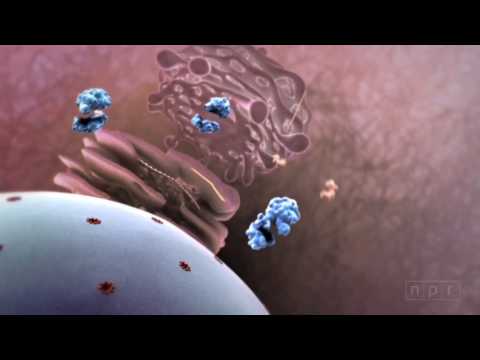
How a Flu Virus Invades our Body.

When you get the flu, viruses turn your cells into tiny factories that help spread the disease. In this animation, NPR's Robert Krulwich and medical animator David Bolinsky explain how a flu virus can trick a single cell into making a million more viruses.
Monoclonal Antibodies against Flu Virus

This animation illustrates how directing monoclonal antibodies to the influenza virus prevents a conformational change in the protein that is necessary for viral entry into the host cell
HIV and flu -- the vaccine strategy

Seth Berkley explains how smart advances in vaccine design, production and distribution are bringing us closer than ever to eliminating a host of global threats -- from AIDS to malaria to flu pandemics.
Swine Flu Immunity video
Swine influenza (also called swine flu, hog flu, and pig flu) refers to influenza caused by those strains of influenza virus, called swine influenza virus (SIV), that usually infect pigs. Swine influenza is common in pigs in the midwestern United States (and occasionally in other states), Mexico, Canada, South America, Europe (including the United Kingdom, Sweden, and Italy), Kenya, Mainland China, Taiwan, Japan and other parts of eastern Asia.
Transmission of swine influenza virus from pigs to humans is not common and properly cooked pork poses no risk of infection. When transmitted, the virus does not always cause human influenza and often the only sign of infection is the presence of antibodies in the blood, detectable only by laboratory tests. When transmission results in influenza in a human, it is called zoonotic swine flu. People who work with pigs, especially people with intense exposures, are at risk of catching swine flu. However, only about fifty such transmissions have been recorded since the mid-20th Century, when identification of influenza subtypes became possible. Rarely, these strains of swine flu can pass from human to human. In humans, the symptoms of swine flu are similar to those of influenza and of influenza-like illness in general, namely chills, fever, sore throat, muscle pains, severe headache, coughing, weakness and general discomfort.
Monoclonal Antibodies in FLU Treatment
This animation illustrates how directing monoclonal antibodies to the influenza virus prevents a conformational change in the protein that is necessary for viral entry into the host cell.
ProcessMonoclonal antibodies binds to the stem of Hemo gluttinin (HA) protein on the surface of the virus, virsus bind and engulfed by the cell, however this novel antibodies prevents the conformational change needed for the virus to fuse endosomal membrane and releases its viral RNA, this stops the viral life cycle and the virus is degraded.
How Flu Vaccine works

FLU shots (flu vaccine) are made-up of dead viral particles of influenza strains. When this fragments are injected individual immune system responds by producing specific antibodies which protect the vaccinated person against infection, following immunization some people may experience mild Flu like symptoms, but usually goes away after 48 hours, As a result the immune system responding to built protection
Subscribe to:
Posts (Atom)