Pages

Showing posts with label cellular respiration. Show all posts

Krebs Cycle

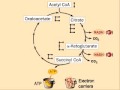
The citric acid cycle, also known as the tricarboxylic acid cycle (TCA cycle) or the Krebs cycle, (or rarely, the Szent-Györgyi-Krebs cycle) is a series of enzyme-catalysed chemical reactions of central importance in all living cells that use oxygen as part of cellular respiration. In eukaryotes, the citric acid cycle occurs in the matrix of the mitochondrion. The components and reactions of the citric acid cycle were established by seminal work from both Albert Szent-Györgyi and Hans Krebs.


  Subscribe in a reader
In aerobic organisms, the citric acid cycle is part of a metabolic pathway involved in the chemical conversion of carbohydrates, fats and proteins into carbon dioxide and water to generate a form of usable energy. Other relevant reactions in the pathway include those in glycolysis and pyruvate oxidation before the citric acid cycle, and oxidative phosphorylation after it. In addition, it provides precursors for many compounds including some amino acids and is therefore functional even in cells performing fermentation.
A simplified view of the process The citric acid cycle begins with acetyl-CoA transferring its two-carbon acetyl group to the four-carbon acceptor compound (oxaloacetate) to form a six-carbon compound (citrate).
The citrate then goes through a series of chemical transformations, losing first one, then a second carboxyl group as CO2. The carbons lost as CO2 originate from what was oxaloacetate, not directly from acetyl-CoA. The carbons donated by acetyl-CoA become part of the oxaloacetate carbon backbone after the first turn of the citric acid cycle. Loss of the acetyl-CoA-donated carbons as CO2 requires several turns of the citric acid cycle. However, because of the role of the citric acid cycle in anabolism, they may not be lost since many TCA cycle intermediates are also used as precursors for the biosynthesis of other molecules.
Most of the energy made available by the oxidative steps of the cycle is transferred as energy-rich electrons to NAD+, forming NADH. For each acetyl group that enters the citric acid cycle, three molecules of NADH are produced. Electrons are also transferred to the electron acceptor Q, forming QH2. At the end of each cycle, the four-carbon oxaloacetate has been regenerated, and the cycle continues.
Products
Products of the first turn of the cycle are: one GTP (or ATP), three NADH, one QH2, two CO2.

Because two acetyl-CoA molecules are produced from each glucose molecule, two cycles are required per glucose molecule. Therefore, at the end of all cycles, the products are: two GTP, six NADH, two QH2, and four CO2


Description Reactants Products
The sum of all reactions in the citric acid cycle is: Acetyl-CoA + 3 NAD+ + Q + GDP + Pi + 2 H2O → CoA-SH + 3 NADH + 3 H+ + QH2 + GTP + 2 CO2
Combining the reactions occurring during the pyruvate oxidation with those occurring during the citric acid cycle, the following overall pyruvate oxidation reaction is obtained: Pyruvic acid + 4 NAD+ + Q + GDP + Pi + 2 H2O → 4 NADH + 4 H+ + QH2 + GTP + 3 CO2
Combining the above reaction with the ones occurring in the course of glycolysis, the following overall glucose oxidation reaction (excluding reactions in the respiratory chain) is obtained: Glucose + 10 NAD+ + 2 Q + 2 ADP + 2 GDP + 4 Pi + 2 H2O → 10 NADH + 10 H+ + 2 QH2 + 2 ATP + 2 GTP + 6 CO2
Regulation
The regulation of the TCA cycle is largely determined by substrate availability and product inhibition. NADH, a product of all dehydrogenases in the TCA cycle with the exception of succinate dehydrogenase, inhibits pyruvate dehydrogenase, isocitrate dehydrogenase and α-ketoglutarate dehydrogenase, and also citrate synthase. Acetyl-CoA inhibits pyruvate dehydrogenase, while succinyl-CoA inhibits succinyl-CoA synthase and citrate synthase. When tested in vitro with TCA enzymes, ATP inhibits citrate synthase and α-ketoglutarate dehydrogenase; however, ATP levels do not change more than 10% in vivo between rest and vigorous exercise. There is no known allosteric mechanism that can account for large changes in reaction rate from an allosteric effector whose concentration changes less than 10%
Calcium is used as a regulator. It activates pyruvate dehydrogenase, isocitrate dehydrogenase and α-ketoglutarate dehydrogenase. This increases the reaction rate of many of the steps in the cycle, and therefore increases flux throughout the pathway.
Citrate is used for feedback inhibition, as it inhibits phosphofructokinase, an enzyme involved in glycolysis that catalyses formation of fructose 1,6-bisphosphate, a precursor of pyruvate. This prevents a constant high rate of flux when there is an accumulation of citrate and a decrease in substrate for the enzyme.
Recent work has demonstrated an important link between intermediates of the citric acid cycle and the regulation of hypoxia inducible factors (HIF). HIF plays a role in the regulation of oxygen haemostasis, and is a transcription factor which targets angiogenesis, vascular remodelling, glucose ulitisation, iron transport and apoptosis. HIF is synthesized consititutively and hydroxylation of at least one of two critical proline residues mediates their interation with the von Hippel Lindau E3 ubiquitin ligase complex which targets them for rapid degradation. This reaction is calalysed by prolyl 4-hydroxylases. Fumarate and succinate have been identified as potent inhibitors of prolyl hydroxylases thus leading to the stabilisation of HIF.
Major metabolic pathways converging on the TCA cycle
Several catabolic pathways converge on the TCA cycle. Reactions that form intermediates of the TCA cycle in order to replenish them (especially during the scarcity of the intermediates) are called anaplerotic reactions.
The citric acid cycle is the third step in carbohydrate catabolism (the breakdown of sugars). Glycolysis breaks glucose (a six-carbon-molecule) down into pyruvate (a three-carbon molecule). In eukaryotes, pyruvate moves into the mitochondria. It is converted into acetyl-CoA by decarboxylation and enters the citric acid cycle.
In protein catabolism, proteins are broken down by protease enzymes into their constituent amino acids. The carbon backbone of these amino acids can become a source of energy by being converted to Acetyl-CoA and entering into the citric acid cycle.
In fat catabolism, triglycerides are hydrolyzed to break them into fatty acids and glycerol. In the liver the glycerol can be converted into glucose via dihydroxyacetone phosphate and glyceraldehyde-3-phosphate by way of gluconeogenesis. In many tissues, especially heart tissue, fatty acids are broken down through a process known as beta oxidation which results in acetyl-CoA which can be used in the citric acid cycle. Sometimes beta oxidation can yield propionyl CoA which can result in further glucose production by gluconeogenesis in the liver.
The citric acid cycle is always followed by oxidative phosphorylation. This process extracts the energy (as electrons) from NADH and QH2, oxidizing them to NAD+ and Q, respectively, so that the cycle can continue. Whereas the citric acid cycle does not use oxygen, oxidative phosphorylation does.
The total energy gained from the complete breakdown of one molecule of glucose by glycolysis, the citric acid cycle and oxidative phosphorylation equals about 30 ATP molecules, in eukaryotes. The citric acid cycle is called an amphibolic pathway because it participates in both catabolism and anabolism.

Glycolysis


Glycolysis (from glycose, an older term for glucose + -lysis degradation) is the metabolic pathway that converts glucose, C6H12O6, into pyruvate, C3H5O3-. The free energy released in this process is used to form the high energy compounds, ATP (adenosine triphosphate) and NADH (reduced nicotinamide adenine dinucleotide).
Glycolysis is a sequence of ten reactions involving ten intermediate compounds (one of the steps involves two intermediates). The intermediates provide entry points to glycolysis. For example, most monosaccharides, such as fructose, glucose, and galactose, can be converted to one of these intermediates. The intermediates may also be directly useful. For example, the intermediate dihydroxyacetone phosphate is a source of the glycerol that combines with fatty acids to form fat.
Glycolysis is the archetype of a universal metabolic pathway. It occurs, with variations, in nearly all organisms, both aerobic and anaerobic. The wide occurrence of glycolysis indicates that it is one of the most ancient metabolic pathways known.


The most common and well-known type of glycolysis is the Embden-Meyerhof pathway, which was elucidated by Gustav Embden and Otto Meyerhof.

Preparatory phase

The first five steps are regarded as the preparatory (or investment) phase since they consume energy to convert the glucose into two three-carbon sugar phosphate.

The first step in glycolysis is phosphorylation of glucose by a family of enzymes called hexokinases to form glucose 6-phosphate (G6P). This reaction consumes ATP, but it acts to keep the glucose concentration low, promoting continuous transport of glucose into the cell through the plasma membrane transporters. In addition, it blocks the glucose from leaking out - the cell lacks transporters for G6P. Glucose may alternatively be from the phosphorolysis or hydrolysis of intracellular starch or glycogen.

In animals, an isozyme of hexokinase called glucokinase is also used in the liver, which has a much lower affinity for glucose (Km in the vicinity of normal glycemia), and differs in regulatory properties. The different substrate affinity and alternate regulation of this enzyme are a reflection of the role of the liver in maintaining blood sugar levels.

Cofactors: Mg2+

G6P is then rearranged into fructose 6-phosphate (F6P) by glucose phosphate isomerase. Fructose can also enter the glycolytic pathway by phosphorylation at this point.

The change in structure is an isomerization, in which the G6P has been converted to F6P. The reaction requires an enzyme, phosphohexose isomerase, to proceed. This reaction is freely reversible under normal cell conditions. However, it is often driven forward because of a low concentration of F6P, which is constantly consumed during the next step of glycolysis. Under conditions of high F6P concentration this reaction readily runs in reverse. This phenomenon can be explained through Le Chatelier's Principle.

The energy expenditure of another ATP in this step is justified in 2 ways: The glycolytic process (up to this step) is now irreversible, and the energy supplied destabilizes the molecule. Because the reaction catalyzed by Phosphofructokinase 1 (PFK-1) is energetically very favorable, it is essentially irreversible, and a different pathway must be used to do the reverse conversion during gluconeogenesis. This makes the reaction a key regulatory point (see below).

The same reaction can also be catalysed by pyrophosphate dependent phosphofructokinase (PFP or PPi-PFK), which is found in most plants, some bacteria, archea and protists but not in animals. This enzyme uses pyrophosphate (PPi) as a phosphate donor instead of ATP. It is a reversible reaction, increasing the flexibility of glycolytic metabolism. A rarer ADP-dependent PFK enzyme variant has been identified in archaean species.

Cofactors: Mg2+

Destabilizing the molecule in the previous reaction allows the hexose ring to be split by aldolase into two triose sugars, dihydroxyacetone phosphate, a ketone, and glyceraldehyde 3-phosphate, an aldehyde. There are two classes of aldolases: class I aldolases, present in animals and plants, and class II aldolases which present in fungi and bacteria; the two classes use different mechanisms in cleaving the hexose ring.

Triosephosphate isomerase rapidly interconverts dihydroxyacetone phosphate with glyceraldehyde 3-phosphate (GADP) that proceeds further into glycolysis. This is advantageous, as it directs dihydroxyacetone phosphate down the same pathway as glyceraldehyde 3-phosphate, simplifying regulation.


Pay-off phase
The second half of glycolysis is known as the pay-off phase, characterised by a net gain of the energy-rich molecules ATP and NADH. Since glucose leads to two triose sugars in the preparatory phase, each reaction in the pay-off phase occurs twice per glucose molecule. This yields 2 NADH molecules and 4 ATP molecules, leading to a net gain of 2 NADH molecules and 2 ATP molecules from the glycolytic pathway per glucose.

The triose sugars are dehydrogenated and inorganic phosphate is added to them, forming 1,3-bisphosphoglycerate.

The hydrogen is used to reduce two molecules of NAD+, a hydrogen carrier, to give NADH + H+.

This step is the enzymatic transfer of a phosphate group from 1,3-bisphosphoglycerate to ADP by phosphoglycerate kinase, forming ATP and 3-phosphoglycerate. At this step, glycolysis has reached the break-even point: 2 molecules of ATP were consumed, and 2 new molecules have now been synthesized. This step, one of the two substrate-level phosphorylation steps, requires ADP; thus, when the cell has plenty of ATP (and little ADP), this reaction does not occur. Because ATP decays relatively quickly when it is not metabolized, this is an important regulatory point in the glycolytic pathway.

Cofactors: Mg2+

Phosphoglycerate mutase now forms 2-phosphoglycerate. Notice that this enzyme is a mutase and not an isomerase. Whereas an isomerase changes the oxidation state of the carbons of the compound, a mutase does not.

Enolase next forms phosphoenolpyruvate from 2-phosphoglycerate.

Cofactors: 2 Mg2+: one "conformational" ion to coordinate with the carboxylate group of the substrate, and one "catalytic" ion which participates in the dehydration.

A final substrate-level phosphorylation now forms a molecule of pyruvate and a molecule of ATP by means of the enzyme pyruvate kinase. This serves as an additional regulatory step, similar to the phosphoglycerate kinase step.

Cofactors: Mg2+

Calvin Cycle Video


Definition Calvin cycle is a biochemical reaction takes place in Stroma of the chloroplasts in photosynthetic plants,it was discovered by Melvin Calvin,Bassham and Andrew Benson at the University of California, Berkeley.
Energy from light are stored has ATP and NADPH .in Calvin cycle this stored energy is used to make sugar molecule, the Calvin cycle is a complex theory of chemical reactions carried out in stroma.

  Subscribe in a reader

Process of Calvin cycle
The Calvin cycle begins with the input of CO2, three molecules are carbon dioxide added to three molecules of 5 carbon sugar abbreviated RUBP, this molecules are rearranged to become 6 molecules of 3-PGA which have 3 carbons each, note the molecules are not actually rearranged .in the next two reactions product from light reaction are used to boost energy of these 3 carbon moelcules.First high energy phosphate groups are added 6 ATP molecules contribute phosphate groups so each 3carbon molecule receives a additional phosphate group ,electrons are added in next reaction 6 molecules of NADPH are oxidized electron in NADPH reduce the 6 3 carbon compounds creating 6 high energy G3P molecule G3P is a sugar the final product of Calvin cycle ,one of G3p molecule represents the 3 carbon dioxide molecules fixed so far the other 5 G3P molecules are reshuffled to regenerate the original RUBP molecules .To summaries so far the Calvin cycle used the energy of the light reaction to reduce 3 molecules of carbon dioxide and produce 1 molecule of G3P , 3 more carbon-dioxide molecules are fixed to form G3P in the same complicated way ,to make each G3P the Calvin cycle consumes 9 ATP molecules and 6 NADPH molecules ,these are regenerated in Light reaction ,G3p is actual final product of the Calvin cycle the cell combine 2 G3Ps to make Glucose which stores the energy

Non-Cyclic Photophosphorylation

Non-cyclic photo- phosphorylation,cytochrome b6f uses the energy of electrons from PSII to pump protons from the stoma to the lumen. The proton gradient across the thylakoid membrane creates a proton-motive force, used by ATP synthase to form AT

 Non-cyclic photophosphorylation Process

  • Non-cyclic photophosphorylation takes place inside a chloroplast, on or in a thylakoid membrane.
  • A photon of light energy strikes the leaf and hits photosystem 2. The energy will pass from one antenna pigment molecule to another until it reaches a reaction center molecule (p680). The light energy will then energize 2 electrons.
  • The energized electrons now pass to an electron acceptor this creates an electron "hole" within PS2.
  • Water is split inside the thylakoid, providing the electrons to fill the "hole" for photosystem 2. The hydrogen ions, that for the moment are inside the thylakoid, and oxygen which will diffuse out of the chloroplast and the cell.
  • From the electron acceptor the electrons pass to plastoquinone (PQ).
  • From plastoquinone (PQ) the electrons pass on to a complex of cytochromes.
  • As the electrons move from PQ to the cytochrome complex they release enough energy to power the active transport of hydrogen ions from the stroma into the thylakoid space. This generates a large hydrogen ion gradient.
  • From the cytochrome complex the electrons pass on to Photosystem 1 to fill an electron "hole" in PS1.
  • A photon of light energy strikes the leaf and hits photosystem 1. The energy will pass from one antenna pigment molecule to another until it reaches a reaction center molecule (p700). The light energy will then energize 2 electrons.
  • The energized electrons now pass to an electron acceptor this creates the electron "hole" within PS1.
  • From the electron acceptor the electrons pass to ferredoxin (Fd).
  • From ferredoxin (Fd) the electrons and 2 hydrogen ions are used to reduce NADP+ to NADPH + H+. The NADPH + H+ is going to be utlized in the Calvin Cycle (dark reactions).
  • The hydrogen ions that have been pumped into the thylakoid space pass down a concentration gradient through the ATP synthetase complexes. As the ions pass through the synthetase complex their chemiosmotic energy is released.
  • The energy released by the hydrogen ions is used to help convert ADP and a phosphate group into ATP. Some of this ATP is going to be utlized in the Calvin Cycle (dark reactions).

Aerobic Metabolism

Aerobic respiration requires oxygen in order to generate energy (ATP). It is the preferred method of pyruvate breakdown from glycolysis and requires that pyruvate enter the mitochondrion in order to be fully oxidized by the Krebs cycle. The product of this process is energy in the form of ATP (Adenosine Triphosphate), by substrate-level phosphorylation, NADH and FADH2.
Simplified reaction: C6H12O6 (aq) + 6 O2 (g) → 6 CO2 (g) + 6 H2O (l)
ΔG = -2880 kJ per mole of C6H12O6


The reducing potential of NADH and FADH2 is converted to more ATP through an electron transport chain with oxygen as the "terminal electron acceptor". Most of the ATP produced by aerobic cellular respiration is made by oxidative phosphorylation. This works by the energy released in the consumption of pyruvate being used to create a chemiosmotic potential by pumping protons across a membrane. This potential is then used to drive ATP synthase and produce ATP from ADP. Biology textbooks often state that 38 ATP molecules can be made per oxidised glucose molecule during cellular respiration (2 from glycolysis, 2 from the Krebs cycle, and about 34 from the electron transport system).[2] However, this maximum yield is never quite reached due to losses (leaky membranes) as well as the cost of moving pyruvate and ADP into the mitochondrial matrix and current estimates range around 29 to 30 ATP per glucose.


Aerobic metabolism is 19 times more efficient than anaerobic metabolism (which yields 2 mol ATP per 1 mol glucose). They share the initial pathway of glycolysis but aerobic metabolism continues with the Krebs cycle and oxidative phosphorylation. The post glycolytic reactions take place in the mitochondria in eukaryotic cells, and in the cytoplasm in prokaryotic cells.

Cellular Respiration Overview Animation

Cellular respiration is the set of the metabolic reactions and processes that take place in organisms' cells to convert biochemical energy from nutrients into adenosine triphosphate (ATP), and then release waste products. The reactions involved in respiration are catabolic reactions that involve the oxidation of one molecule and the reduction of another.
Nutrients commonly used by animal and plant cells in respiration include glucose, amino acids and fatty acids, and a common oxidizing agent (electron acceptor) is molecular oxygen (O2). Bacteria and archaea can also be lithotrophs and these organisms may respire using a broad range of inorganic molecules as electron donors and acceptors, such as sulfur, metal ions, methane or hydrogen. Organisms that use oxygen as a final electron acceptor in respiration are described as aerobic, while those that do not are referred to as anaerobic.

Bookmark and Share  Subscribe in a reader
The energy released in respiration is used to synthesize ATP to store this energy. The energy stored in ATP can then be used to drive processes requiring energy, including biosynthesis, locomotion or transportation of molecules across cell membranes. Because of its ubiquity in nature, ATP is also known as the "universal energy currency".
Aerobic respiration
Aerobic respiration requires oxygen in order to generate energy (ATP). It is the preferred method of pyruvate breakdown from glycolysis and requires that pyruvate enter the mitochondrion in order to be fully oxidized by the Krebs cycle. The product of this process is energy in the form of ATP (Adenosine Triphosphate), by substrate-level phosphorylation, NADH and FADH2.
The reducing potential of NADH and FADH2 is converted to more ATP through an electron transport chain with oxygen as the "terminal electron acceptor". Most of the ATP produced by aerobic cellular respiration is made by oxidative phosphorylation. This works by the energy released in the consumption of pyruvate being used to create a chemiosmotic potential by pumping protons across a membrane. This potential is then used to drive ATP synthase and produce ATP from ADP. Biology textbooks often state that 38 ATP molecules can be made per oxidised glucose molecule during cellular respiration (2 from glycolysis, 2 from the Krebs cycle, and about 34 from the electron transport system).[1] However, this maximum yield is never quite reached due to losses (leaky membranes) as well as the cost of moving pyruvate and ADP into the mitochondrial matrix and current estimates range around 29 to 30 ATP per glucose.

Aerobic metabolism is 19 times more efficient than anaerobic metabolism (which yields 2 mol ATP per 1 mol glucose). They share the initial pathway of glycolysis but aerobic metabolism continues with the Krebs cycle and oxidative phosphorylation. The post glycolytic reactions take place in the mitochondria in eukaryotic cells, and in the cytoplasm in prokaryotic cells.
Glycolysis
Glycolysis is a metabolic pathway that is found in the cytoplasm of cells in all living organisms and is anaerobic, or doesn't require oxygen. The process converts one molecule of glucose into two molecules of pyruvate, and makes energy in the form of two net molecules of ATP. Four molecules of ATP per glucose are actually produced; however, two are consumed for the preparatory phase. The initial phosphorylation of glucose is required to destabilize the molecule for cleavage into two triose sugars. During the pay-off phase of glycolysis, four phosphate groups are transferred to ADP by substrate-level phosphorylation to make four ATP, and two NADH are produced when the triose sugars are oxidized.
Oxidative decarboxylation of pyruvate
The pyruvate is oxidized to acetyl-CoA and CO2 by the Pyruvate dehydrogenase complex, a cluster of enzymes—multiple copies of each of three enzymes—located in the mitochondria of eukaryotic cells and in the cytosol of prokaryotes. In the process one molecule of NADH is formed per pyruvate oxidized, and 3 moles of ATP are formed for each mole of pyruvate. This step is also known as the link reaction, as it links glycolysis and the Krebs cycle.
Citric acid cycle
This is also called the Krebs cycle or the tricarboxylic acid cycle. When oxygen is present, acetyl-CoA is produced from the pyruvate molecules created from glycolysis. Once Acetyl CoA is formed, two processes can occur, aerobic or anaerobic respiration. When oxygen is present, the mitochondria will undergo aerobic respiration which leads to the Krebs cycle. However, if oxygen is not present, fermentation of the pyruvate molecule will occur. In the presence of oxygen, when acetyl-CoA is produced, the molecule then enters the citric acid cycle (Krebs cycle) inside the mitochondrial matrix, and gets oxidized to CO2 while at the same time reducing NAD to NADH. NADH can be used by the electron transport chain to create further ATP as part of oxidative phosphorylation. To fully oxidize the equivalent of one glucose molecule, two acetyl-CoA must be metabolized by the Krebs cycle. Two waste products, H2O and CO2, are created during this cycle.
The citric acid cycle is an 8-step process involving 8 different enzymes. Throughout the entire cycle, Acetyl CoA changes into Citrate, Isocitrate, α-ketoglutarate, succinyl-CoA, succinate, fumarate, malate, and finally, oxaloacetate. The net energy gain from one cycle is 3 NADH, 1 FADH, and 1 ATP. Thus, the total amount of energy yield from one whole glucose molecule (2 pyruvate molecules) is 6 NADH, 2 FADH, and 2 ATP.
Oxidative phosphorylation
In eukaryotes, oxidative phosphorylation occurs in the mitochondrial cristae. It comprises the electron transport chain that establishes a proton gradient (chemiosmotic potential) across the inner membrane by oxidizing the NADH produced from the Krebs cycle. ATP is synthesised by the ATP synthase enzyme when the chemiosmotic gradient is used to drive the phosphorylation of ADP. The electrons are finally transferred to exogenous oxygen, and with the addition of two protons, water is formed.