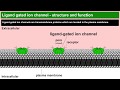
Ligand-gated ion channels (LGICs) are a group of transmembrane ion channel proteins which open to allow ions such as Na+, K+, Ca2+, or Cl- to pass through the membrane in response to the binding of a chemical messenger (i.e. a ligand),such as a neurotransmitter.
Showing posts with label Pharmacology. Show all posts
Ligand gated ion channels structure and function

Gleevecs Effects on tryosine Kinase
Imatinib is a drug used to treat certain types of cancer. It is currently marketed by Novartis as Gleevec (USA) or Glivec (Europe/Australia) as its mesylate salt, imatinib mesilate (INN). It was originally coded during development as CGP57148B or STI-571 (these terms are used in early preclinical publications). It is used in treating chronic myelogenous leukemia (CML), gastrointestinal stromal tumors (GISTs) and a number of other malignancies.
The animation begins by introducing the Philadelphia Chromosome, the result of a reciprocal translocation between chromosomes 9 and 22. More specifically the breakpoint cluster region (BCR) of chromosome 22 is fused with part of the Abelson (ABL) gene on chromosome 9. The resulting BCR-ABL genetic domain now located within chromosome 22 and codes for a mutant tyrosine kinase also known as BCR-ABL. Under normal circumstances tyrosine kinase proteins respond to external cellular messaging proteins, and ultimately initiate a series of reactions that culminate in cellular replication.
Conversely, BCR-ABL is constitutively active, meaning it does not require activation by the aforementioned cellular messaging proteins in order to stimulate cellular replication. This results in acceleration of cell division, an inhibition of DNA repair, overall genomic instability, and the fatal blast crisis characteristic of chronic myelogenous leukemia. The animation progresses to introduce Gleevec (imatinib), the first in a class of drugs that specifically target and competively inhibit the ATP binding site on BCR-ABL tyrosine kinase. This prevents the ABL domain from phosphorylating the tyrosine residue, and as a result preventing the proliferation of hematopoietic cells that express BCR-ABL. Therapy with imatinib results in a dramatic reduction of tumor clone cells and the occurrence of blast crisis', through targeted drug treatment which leaves health cells unscathed.
Drugs : One Size Does Not Fit All -Lecture
There are a number of causes for variation in drug response across the population, but differences in genetics are an important factor. Russ Altman, Professor & Chair of Bioengineering and Professor of Genetics and Medicine, discusses how variations in genetics can alter the "typical" response as well as touch upon the ethical issues with the use of this knowledge.Russ Altman for the Stanford University
Russ Altman started his education in Harvard university his work was primary in biochemistry and molecular biology,he came to Stanford and received his phd in Medical Information Science and MD in Stanford medical school
He was the president of International Society for Computational Biology (2000-2001) ,In Stanford he is professor of Genetics ,Bioengineering ,Medicine and computer science and He is the chairman of Bioengineering department.
In this lecture Dr.Russ Altman speaks about variation drug response,Human genome ,Pharmacology
This lecture will very useful for those who are interested in Drug designing,Bioinformatics students.
ClinSeq: A Large-Scale Medical Sequencing Clinical Research Pilot Study
The purpose of ClinSeq is to pilot large-scale medical sequencing (LSMS) in a clinical research setting. By sequencing targeted regions of a person's genome and returning relevant and individual results to that person, we will begin investigating some of the technical, medical and genetic counseling issues that accompany the implementation of LSMS in the clinical setting.
Specifically, we seek to develop the technologic and procedural infrastructure to facilitate this type of research and demonstrate that it is feasible to sequence and interpret large amounts of genomic sequence data and return individual results to subjects.
Reducing Chemotherapy Toxicity for Colon Cancer Patients
Everyone responds differently to medicines. The dose of a drug that cures one person can be ineffective-or even toxic-in someone else. Although many non-genetic factors play a role in how an individual patient responds to a particular drug treatment, many differences in drug response come from genetic variation. Individualizing a drug's dose based on pharmacogenomic information can help a patient get the most benefit from a drug while minimizing side effects.
Take the example of treating colorectal cancer with a chemotherapy regimen that includes Camptosar (irinotecan). A gene, called UGT1A1, produces an enzyme that metabolizes Camptosar. Variations in this gene can influence a patient's ability to break down the drug.
About 10 percent of the North American population has a variation of the UGT1A1 gene that reduces their ability to metabolize Camptosar, leading to high blood levels of the drug and a higher risk of toxic side effects. If these patients are given standard doses of Camptosar, about half will develop severe neutropenia, which can be fatal.
A test, called the Invader UGT1A1 Molecular Assay, can identify whether a patient has the genetic variant affecting the metabolism of Camptosar and thus would be at higher risk for developing severe neutropenia. The drug label says to consider lowering the starting dose of the Camptosar for those patients found to be high risk.
Fentanyl Patches
A recent report from the Institute for Safe Medication Practices warns about the dangers of misprescribing fentanyl transdermal patches, such as Duragesic. ISMP reminds practitioners that these patches are intended only for patients who are opioid-tolerant, and should not be used for acute pain.
ISMP also pointed out other prescribing errors. In some cases, deaths occurred in patients who were prescribed multiple fentanyl patches, resulting in overdose. In other cases the fentanyl was prescribed in addition to other pain medications, such as oxycodone, or it was prescribed for patients with pre-existing respiratory compromise. ISMP points out that sometimes pharmacists have dispensed these prescriptions without questioning them, and nurses have applied the patches without recognizing the prescribing error.
Here are some of ISMP's recommendations to help avoid these tragic and preventable errors:
• Prescribe fentanyl patches only for patients who are opioid tolerant, and who have chronic pain that is not well-controlled with shorter-acting analgesics. These patches should not be used for postoperative pain, or for pain that's short-term or intermittent. Pharmacists should ensure that the patient is opioid-tolerant and suffering from chronic pain before dispensing the drug, and should question the prescriber if this is not the case.
• Set dosing limits. For example, pharmacy computer systems could be set to flash an alert if more than 25 mcg per hour has been prescribed as a first-time dose. Also, in evaluating whether the dose is appropriate, take into account other opiates or analgesics that may have been prescribed.
• Educate practitioners and patients to know the signs of overdose, which include respiratory distress, shallow breathing, fatigue, sleepiness, confusion, dizziness and fainting.
• Prescribing errors are not the only cause of deaths and injuries from fentanyl patches. They also occur when patients mis-use the patches. Sometimes patients and family members do not understand that heat can increase absorption of the drug to dangerous levels. So patients should be told to avoid heating pads, electric blankets or hot baths while the patch is in place, and let their doctors know if they develop a temperature above 102 degrees.
• There have also been cases where children found used patches in the trash and applied them to their own bodies, and died as a result. And so patients should be warned to dispose of the patches by folding them in half and flushing them down the toilet.
Warning on Colistimethate for Inhalation
FDA is investigating a patient death that may be associated with the inhalation of the antibiotic colistimethate, or Coly-Mycin M. This drug is used to treat serious infections due to Gram-negative bacteria, particularly Pseudomonas aeruginosa. It is approved only for intravenous or intramuscular injection, but some practitioners prescribe it off-label as a solution to be inhaled from a nebulizer. The solution is prepared by mixing the drug with sterile water or saline just prior to inhalation.
Colistimethate is a pro-drug that is inactive in its dry state. When mixed with water, it undergoes spontaneous hydrolysis to the bioactive form, colistin, which may cause pulmonary inflammation. Storing the pre-mixed colistimethate solution for longer than 24 hours results in increased concentrations of colistin, and this may increase the potential for lung toxicity.
In the case FDA is investigating, a cystic fibrosis patient had a home nebulizer treatment with a colistimethate solution that had been pre-mixed by a pharmacy. The patient developed acute respiratory failure and later died.
There are three important precautions that may help to prevent this kind of toxicity:
• First, if you choose to prescribe colistimethate for inhalation, avoid pre-mixed, ready-to-use solutions.
• Second, instruct patients and caregivers to administer the solution promptly after it's mixed.
• Finally, instruct patients who may have supplies of the pre-mixed form to discard them.
Pharmacokinetics-Drug Metabolism
Pharmacokinetics (in Greek: “pharmacon” meaning drug and “kinetikos” meaning putting in motion, the study of time dependency; sometimes abbreviated as “PK”) is a branch of pharmacology dedicated to the determination of the fate of substances administered externally to a living organism. In practice, this discipline is applied mainly to drug substances, though in principle it concerns itself with all manner of compounds ingested or otherwise delivered externally to an organism, such as nutrients, metabolites, hormones, toxins, etc.
Pharmacokinetics is often studied in conjunction with pharmacodynamics. Pharmacodynamics explores what a drug does to the body, whereas pharmacokinetics explores what the body does to the drug. Pharmacokinetics includes the study of the mechanisms of absorption and distribution of an administered drug, the rate at which a drug action begins and the duration of the effect, the chemical changes of the substance in the body (e.g. by enzymes) and the effects and routes of excretion of the metabolites of the drug.
ADME
Pharmacokinetics is divided into several areas which includes the extent and rate of Absorption, Distribution, Metabolism and Excretion. This is commonly referred to as the ADME scheme. However recent understanding about the drug-body interactions brought about the inclusion of new term Liberation. Now Pharmacokinetics can be better described as LADME.
* Liberation is the process of release of drug from the formulation.
* Absorption is the process of a substance entering the body.
* Distribution is the dispersion or dissemination of substances throughout the fluids and tissues of the body.
* Metabolism is the irreversible transformation of parent compounds into daughter metabolites.
* Excretion is the elimination of the substances from the body. In rare cases, some drugs irreversibly accumulate in a tissue in the body.
Pharmacokinetics describes how the body affects a specific drug after administration. Pharmacokinetic properties of drugs may be affected by elements such as the site of administration and the concentration in which the drug is administered. These may affect the absorption rate.
Pharmacology: Oral Meds Absorption
Absorption refers th the transport of the drug across the membrane mucosa cells in the Gastrointestinal track,Drug enters to the Gastrointestinal track by mouth and enters into stomach through esophagus.
Drug dissolves in the stomach,Acidic drugs are absorbed in the stomach and remains un-ionized and charged for easy absorption.the Alkaline Drugs which cannot be absorbed in teh acidic stomach passes through the pyloric sphincter into the 1st part of small intestine and absorbed there,once absorbed in the blood the drug travels to the liver, some drugs are immediately metabolized in the liver.Other drugs may be secreted back in the small intestine in the bile which is called has Enterohepatic circulation,other part of oral dosage may be absorbed in large intestine or faecally excreted.
All other drug dosage may not absorbed due to drug binding to intestinal content which may prevent the passage in the mucosa membrane.or they may be broken down by bacteria in the ileum and colon.
Pharmacology: Intramuscular Absorption
An intramuscular (IM) medication is given by needle into the muscle. This is as opposed to a medication that is given by a needle, for example, into the skin (intradermal) or just below the skin (subcutaneous) or into a vein (intravenous).
Pharmacology: Intra Venous Absorption

Intravenous medication is given in the way catheter inserted in the veins. IV catheter is placed in peripheral or central circulation. The medications are eluded in IV carrier fluid mixes with venous blood and is carried along the route of the blood vein, A medication administered in the bronchial vein is carried to the right side of heart, from there it is pumped toward lung and back to left side of heart, From the left side it pumped through the aorta and into the arterial tree of the body to the upper and lower parts of the body and then to the tissues.
Drug Studies

Almost every American takes a drug every day; many take three or more. This series presented by the UCSF Osher Lifelong Learning Institute explores your medicine, your health and your money. In this episode join John Flaherty, director of medical affairs at Gilead Science, Inc, as he explores the use of drug studies.
Drug Metabolism

Drug metabolism is the metabolism of drugs, their biochemical modification or degradation, usually through specialized enzymatic systems. This is a form of xenobiotic metabolism. Drug metabolism often converts lipophilic chemical compounds into more readily excreted polar products. Its rate is an important determinant of the duration and intensity of the pharmacological action of drugs.
Cancer-Anti-PlGF inhibitors
The animation tell about,how Anti-PlGF inhibitors can be used prevents the cancerous growth
One of 4 persons will be diagnosed with cancer. In many cases current therapy does not provide an effective cure. Biologists know that normal cells divide in a highly regulated in strictly controlled manner and the cancerous tumors are formed when a cell becomes abnormal and divide without control.
Cells of the immune system are capable of detecting and killing these abnormal cells. But in cases of serious disease the rate of cancer cell divisions surpasses the effect of immune system and tumor continues to grow. In order to acquire the nutrients that necessary for growth tumor cells release of growth factors called PLGF that binds to receptors on nearby capillary blood vessels.
This causes the capillary network to expand through the tumor provides increased blood supply and simulating tumor growth. Scientists have discovered that the process can be blocked by the administration of a small molecule called Anti-PLGF Antibody; the antibody binds to the PLGF growth factor thereby preventing associated with the Capillary vessels. This effectively blocks the expansion of capillary network and tumor growth is slowed because of limited blood supply. Because of the strong positive effect of Anti-PLGF antibodies the cancer killing cells of the immune system can now work faster than rate of cancer cell divisions
Cells of the immune system are capable of detecting and killing these abnormal cells. But in cases of serious disease the rate of cancer cell divisions surpasses the effect of immune system and tumor continues to grow. In order to acquire the nutrients that necessary for growth tumor cells release of growth factors called PLGF that binds to receptors on nearby capillary blood vessels, this causes the capillary network to expand through the tumor provides increased blood supply and simulating tumor growth. Scientists have discovered that the process can be blocked by the administration of a small molecule called Anti-PLGF Antibody; the antibody binds to the PLGF growth factor thereby preventing associated with the Capillary vessels. This effectively blocks the expansion of capillary network and tumor growth is slowed because of limited blood supply. Because of the strong positive effect of Anti-PLGF antibodies the cancer killing cells of the immune system can now work faster than rate of cancer cell divisions
Paclitaxel molecule Animation

Paclitaxel is a drug used in the treatment of cancer. It was discovered at Research Triangle Institute (RTI) in 1967 when Monroe E. Wall and Mansukh C. Wani isolated the compound from the bark of the Pacific yew tree, Taxus brevifolia, and noted its antitumor activity in a broad range of rodent tumors. By 1970, the two scientists had determined the structure of paclitaxel. Paclitaxel has since become an effective tool of doctors who treat patients with lung, ovarian, breast cancer, and advanced forms of Kaposi's sarcoma. It is sold under the tradename Taxol. Together with docetaxel, it forms the drug category of the taxanes.
Drugs Tailored to your Genetic Makeup Lecture
Heralded as the future of medicine, personalized medicines seem to be the answer for making therapeutics more likely to be highly effective and safer. Join Deanna Kroetz of UCSF's School of Pharmacy and learn about macromolecular therapeutics, their promise, their limitations.
Pharmacogenetics is the study or clinical testing of genetic variation that gives rise to differing response to drugs.Much of current clinical interest is at the level of pharmacogenetics, involving variation in genes involved in, drug metabolism with a particular emphasis on improving drug safety. The wider use of pharmacogenetic testing is viewed by many as an outstanding opportunity to improve prescribing safety and efficacy. Driving this trend are the 106,000 deaths and 2.2 Million serious events caused by adverse drug reactions in the US each year (Lazarou 1998). As such ADRs are responsible for 5-7% of hospital admissions in the US and Europe, lead to the withdrawal of 4% of new medicines and cost society an amount equal to the costs of drug treatment (Ingelman-Sundberg 2005). Comparisons of the list of drugs most commonly implicated in adverse drug reactions with the list of metabolizing enzymes with known polymorphisms found that drugs commonly involved in adverse drug reactions were also those that were metabolized by enzymes with known polymorphisms
Bupropion
Bupropion is an atypical antidepressant that acts as a norepinephine and dopamine reuptake inhibitor, and nicotinic antagonist ,Initially researched and marketed as an antidepressant, bupropion was subsequently found to be effective as a smoking cessation aid.
Bupropion reduces the severity of nicotine cravings and withdrawal symptoms. After a seven-week treatment, 27% of subjects who received bupropion reported that an urge to smoke was a problem, versus 56% of those who received placebo. In the same study, 21% of the bupropion group reported mood swings, versus 32% of the placebo group. The bupropion treatment course lasts for seven to twelve weeks, with the patient halting the use of tobacco about ten days into the course. The efficacy of bupropion is similar to that of nicotine replacement therapy. Bupropion approximately doubles the chance of quitting smoking successfully after three months. One year after the treatment, the odds of sustaining smoking cessation are still 1.5 times higher in the bupropion group than in the placebo group. The combination of bupropion and nicotine appears not to further increase the cessation rate. In a direct comparison, varenicline (Chantix) showed superior efficacy: after one year, the rate of continuous abstinence was 10% for placebo, 15% for bupropion, and 23% for varenicline. Bupropion slows the weight gain that often occurs in the first weeks after quitting smoking (after seven weeks, the placebo group had an average 2.7 kg increase in weight, versus 1.5 kg for the bupropion group). With time, however, this effect becomes negligible (after 26 weeks, both groups recorded an average 4.8 kg weight gain).
Activity of Bupropionins
Bupropionis may further improve smoking cessation succesfully rate, Nicotine facilitates norpnephron and dopamine release in the central nervous system bupropion mares nicotine by inhibiting norodrenaline and dopamine reuptake a process that some researchers believe alters nicotine withdrawal symptoms. Pulmonary rehabilitation involves education and exercise aimed at improving patient’s quality of life eliminating COPD burden
Subscribe to:
Posts (Atom)
